


 Free Newsletter

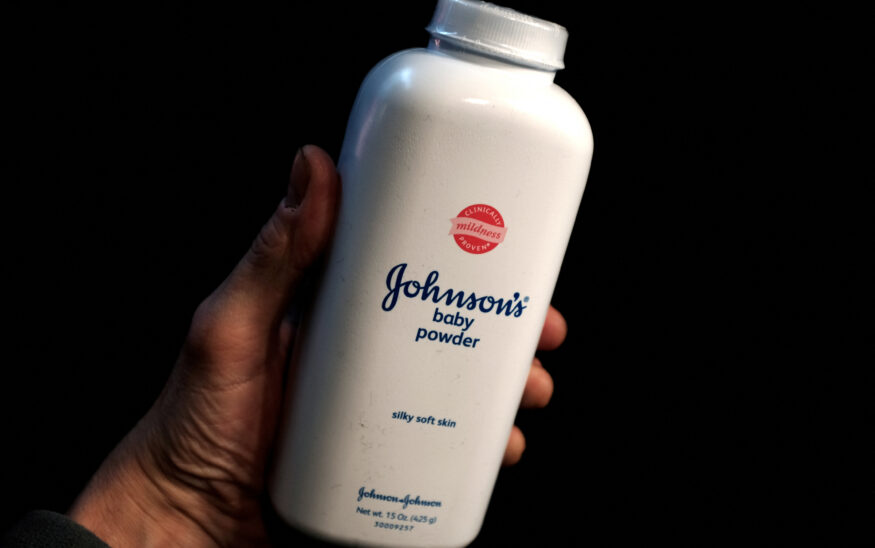
FILE PHOTO: A bottle of Johnson and Johnson Baby Powder is seen in a photo illustration taken in New York, February 24, 2016. REUTERS/Mike Segar/Illustration/File Photo
US judge casts doubt on 69,000 cases alleging J&J talc caused cancer
Reuters//July 23, 2026//


Summary:
- Judge Rukhsanah Singh orders plaintiffs to provide specific causation evidence
- Expert testimony raises doubts about talcum powder causing ovarian cancer
- Johnson & Johnson denies talc products contain asbestos or cause cancer
July 22 (Reuters) – A federal judge cast doubt on Wednesday on claims by approximately 69,000 people alleging that Johnson & Johnson’s baby powder and other talc products caused ovarian cancer, saying plaintiffs must provide more specific evidence or risk having their lawsuits dismissed.
U.S. Magistrate Judge Rukhsanah Singh in Trenton, New Jersey, said that recent testimony by two of the plaintiffs’ experts raised doubts about whether any plaintiffs can provide evidence admissible in court “that talcum powder use specifically caused her ovarian cancer.”
The two experts, Judith Wolf and Daniel Clarke-Pearson, testified in May in preparation for a set of six “bellwether,” or test, trials for the thousands of cases that have been consolidated in New Jersey’s federal court. Verdicts in bellwether trials are used to assess the potential value of remaining claims and guide settlement talks.
J&J has denied the allegations that its talc products caused cancer, saying that talc was safe and did not contain asbestos.
“Today’s decision brings these cases one step closer inevitable, equitable and appropriate outcome—the complete dismissal of the talc litigation,” J&J’s vice president of litigation, Erik Haas, said in a statement.
A spokesperson for the company did not immediately respond to a request for comment, nor did a lead attorney for the plaintiffs.
Wolf and Clarke-Pearson said they could not completely rule out other possible causes of the plaintiffs’ ovarian cancer, according to Singh’s opinion.
“If such uncertainty is indeed reality, then how can any plaintiff here meet her burden on the merits of her claim?” Singh wrote.
Singh said that the debate over causation would not lead to “instant dismissal” of the thousands of cases in the consolidated federal litigation. The judge ordered plaintiffs to respond by November 19, and to explain why their case should not be dismissed over the failure to provide an admissible expert opinion that J&J talc caused their specific cancer.
In addition to the consolidated federal court cases, J&J also faces lawsuits in state courts around the U.S. J&J has won some of the recent trials in state courts, but ?juries ?have awarded large verdicts for plaintiffs in other cases.
The litigation resumed in March 2025, after being put on hold for more than three years during J&J’s repeated failed attempts to resolve the lawsuits through a shell company’s bankruptcy.
J&J stopped selling talc-based baby powder in the U.S. in 2020, switching to a cornstarch product.
(Reporting by Dietrich Knauth in New York; Editing by Alexia Garamfalvi, Will Dunham and David Gregorio)
Related Articles
Related Content






Legal Tech
- How large language models are leveling the personal injury playing field
- Attorney Share, Lawmatics integrate to automate law firm referrals
- How ransomware tactics against law firms are changing








Verdicts & Settlements
- Motor Vehicle Negligence – Motorcyclist suffers severe injuries in vehicle accident
- Medical Malpractice – Patient dies after alleged improper medicine admin
- Workers’ Compensation-Vehicle accident paralyzes Brazilian cement worker
- Medical Malpractice – Death from cancer followed stomach pain misdiagnosis
- Workers’ Compensation – Seasonal worker paralyzed in tobacco baler accident
Opinion Digests
- Criminal – Defendant convicted based upon Commonwealth witnesses’ testimony
- Zoning – Party failed to show its due process rights were violated
- Tort – Jury’s zero-damages verdict for inmate plaintiff affirmed
- Parent and child – Record supported termination of mother’s parental rights
- Criminal – Man convicted of grand larceny after stealing $26,000
- Parent and child – Brothers dispute who should be their mother’s guardian
- Tort – Allegedly defamatory statements lacked the requisite “sting”
