


 Free Newsletter

UK faculty opposed naming federal judge dean of law school
USA TODAY Network via Reuters Connect//April 21, 2026//
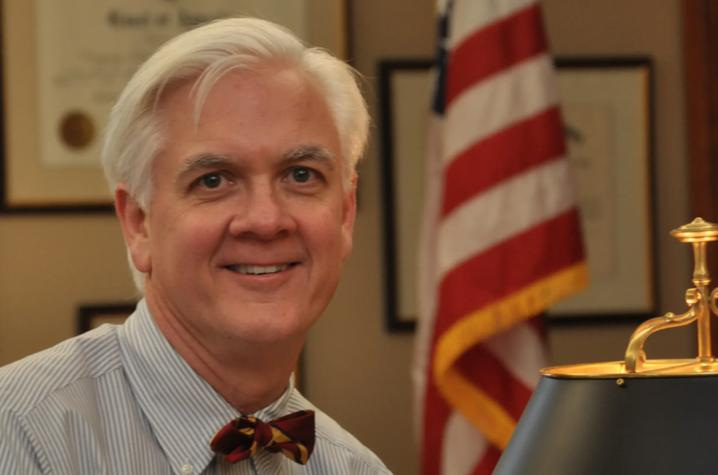
Greg Van Tatenhove, a U.S. district judge for the Eastern District of Kentucky, was named as the new dean of the J. David Rosenberg College of Law in March 2026.
UK faculty opposed naming federal judge dean of law school
USA TODAY Network via Reuters Connect//April 21, 2026//


Summary:
- Substantial majority of UK law faculty opposed Van Tatenhove
- Van Tatenhove lacks traditional academic background for dean
- Possible violation of ABA accreditation standards reported
The incoming dean of the University of Kentucky J. David Rosenberg College of Law, a U.S. district judge for the Eastern District of Kentucky, was appointed to the post despite objections from law faculty.
On March 6, UK officials announced Provost Robert S. DiPaola had selected U.S. District Judge Greg Van Tatenhove to be dean of the law school. But weeks earlier, UK law faculty expressed to university officials leading the search process that a “substantial majority” of their peers felt Van Tatenhove was “unacceptable” to be the school’s next dean, records reviewed by The Courier Journal show.
In a February email obtained by The Courier Journal, UK law school associate deans Joshua Douglas and Beau Steenken told law faculty they had sent an email to DiPaola and others involved in the dean search informing them that a “substantial majority of the faculty expressed that Candidate D does not meet the standards of the candidate profile” the university put forward.
After Van Tatenhove was announced as the incoming dean, UK law professor Ramsi Woodcock reported possible misconduct to UK President Eli Capilouto on March 12. In the report, Woodcock claimed Van Tatenhove was “Candidate D” and that the administration’s choice to appoint him over their objections could constitute a violation of American Bar Association accreditation standards. In response to a Courier Journal open records request, the university’s official records custodian, Eric Monday, wrote Woodcock’s report “is subject to an ongoing investigation.”
Woodcock wrote about the hiring decision in a recent op-ed published in The Courier Journal that criticized the university for risking the law school’s accreditation.
“At any school interested in protecting its accreditation, that would have been the end of Van Tatenhove’s candidacy,” Woodcock wrote in the op-ed, referencing the associate deans’ email.
In a written statement, UK spokesperson Jay Blanton said the search process followed an “established and extensive process that gets input from numerous groups through multiple venues,” including faculty, staff, students, university leadership and members of the law school’s advisory board.
“Based on broad input from these constituents, we made a choice that positions our students, the College and the Commonwealth for long?term success. As in any process, not everyone agrees, but everyone’s input is taken and considered seriously and with respect,” Blanton said.
‘Substantial majority’ of law faculty objected to Greg Van Tatenhove’s appointment
Douglas and Steenken could not be reached for comment. In the email they said they sent to the provost, the associate deans said law faculty met informally after four finalists for the position all visited campus. They wrote that a “substantial majority of the faculty” found the first three candidates to be “acceptable,” and a “substantial majority of the faculty” found the fourth candidate to be “unacceptable.”
The associate deans said the faculty felt as though the fourth candidate did not meet the candidate standards the university publicized when they announced the position and did not exhibit “progressive and broad academic administrative leadership.” The associate deans added that faculty felt the fourth candidate lacked the qualifications to be granted tenure — a possible violation of an accreditation standard that requires a dean to also be a tenured faculty member, except for in “extraordinary circumstances.”
Woodcock’s letter to the president noted Van Tatenhove’s appointment could violate an accreditation standard interpretation that states “a dean should not be appointed over stated objection of a substantial majority of the faculty,” unless there is “good cause.” (Woodcock has been relieved of teaching and classroom responsibilities since last July, due to his controversial speech regarding Israel.)
A spokesperson for the American Bar Association said the organization’s accreditation body does not comment on accreditation matters related to specific schools.
In a phone call with The Courier Journal, UK law professor Douglas Michael called Van Tatenhove a “very unconventional choice” for dean.
“I personally don’t think he met the qualifications that we had posted for the job, and he didn’t indicate that he had relevant decanal experience,” Michael said. “That said, I’m wildly hopeful that he’ll just be successful as anything as our new dean.”
Who is District Judge Greg Van Tatenhove?
Nominated to the bench by former President George W. Bush in 2005, Van Tatenhove does not share the academic background that the other three dean finalists had.
The other finalists — Michael Higdon, Mary Graw Leary and Milena Sterio — were all employed at other law schools, the Lexington Herald Leader reported.
Prior to his judgeship, Van Tatenhove was U.S. Attorney for the Eastern District of Kentucky and served as chief of staff for former U.S. Rep. Ron Lewis, R-Kentucky. He is a Rosenberg College of Law graduate and is currently an adjunct instructor at the law school.
Despite not coming from a traditional academic background, UK spokesperson Blanton said Van Tatenhove’s “record is scholarship — scholarship at the highest level.”
“Hundreds of his judicial opinions have been effectively peer?reviewed by the Sixth Circuit with an affirmation rate above 80%,” Blanton said in a statement. “Although some might only think of scholarship being what occurs by long term residential university faculty, broader definitions include such integrated and important ‘real world’ scholarship that will be an example for students as they pursue their careers — many of them in Kentucky.”
Blanton noted that selecting a federal judge to run a law school is not without precedent. He pointed to Duke Law, which was led by David F. Levi, a former U.S. District Judge of the Eastern District of California, from 2007-2018.
Van Tatenhove has presided over some high-profile cases in recent months. He is the judge in an ongoing case in which the U.S. Department of Justice seeks to compel Kentucky election officials to share the commonwealth’s unredacted voter registration list with the federal government.
He also presided over the DOJ’s June 2025 lawsuit against the Kentucky Council on Postsecondary Education, which centered on a regulation that allowed undocumented immigrants in the commonwealth to pay in-state tuition at its colleges and universities. Van Tatenhove issued an order in that case on March 31, approving a consent decree that blocks enforcement of the regulation.
A representative for Van Tatenhove said the judge declined to comment, citing ethics rules. His appointment must be approved by UK’s board of trustees, which is set to meet for the first time since his appointment on April 24.
Reporting by Killian Baarlaer, Louisville Courier Journal
Related Articles
Related Content













Verdicts & Settlements
- Medical Malpractice-Patient dies following blood loss in surgery
- Motor Vehicle Negligence – Defense points to plaintiff’s prior collision, stressors
- Medical Malpractice – Ingrown toenail removal leads to CRPS type 2
- Motor Vehicle Negligence Rear-seat passenger injured when car hits telephone pole
- Motor Vehicle Negligence- Car crash after back surgery causes additional injuries
- Medical Malpractice – Jurors side with cardiologist over treatment of strokes
- Negligence and Tort- Ice pack use during tattoo removal causes frostbite
- Workers’ Compensation Struck by metal door at workplace, plaintiff sustains subdural hematoma
- Motor Vehicle Negligence Woman struck by vehicle loses senses of taste, smell
- Motor Vehicle Negligence – Pedestrian struck by car while in parking lot
- Motor Vehicle Negligence- Driver fractures right leg in tractor-trailer collision
Opinion Digests
- Freedom of Information – Exemption 5 protects draft PTAB written decision
- Fraud – Homeowners’ RICO claim is dismissed
- Criminal – Sex-offender convicted of providing false information
- Evidence – Defendants must respond to post-judgment discovery
- Patent and trademark – Several claims found to be ineligible for patent protection
- Criminal – Evidence supports robbery conviction
- Administrative – Internal Communications Among Patent Judges – Withheld Materials
- Criminal – Denial of continuance wasn’t abuse of discretion
- Criminal – Felony eluding conviction violated Double Jeopardy clause
- Criminal – Defendant was wrongly convicted of two counts of hit-and-run
- Criminal – Sexually-violent predator denied conditional release
- Constitutional – Redistricting effort violated Virginia Constitution
